By Anthony La Magra
Part 2 of Sergei Rachmaninoff, Composer, Conductor and Pianist, focused on his early years living in America as a highly celebrated virtuoso pianist, performing concertos and solo recitals throughout the United States and Europe. It also noted the growing interest in his music by other musicians who transcribed some of his pieces for various ensembles and instruments. During the 1920s and 30s, he also recorded a variety of works, both his own compositions and those of other composers, for the Thomas Edison and RCA Victor Companies, as well as a number of piano rolls on the reproducing piano of the American Piano Company (AMPICO).
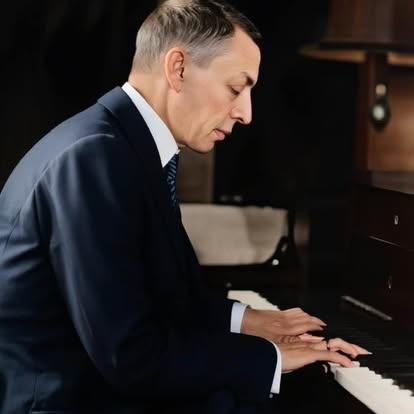
Fortunately, advances in recording technology now offer a clearer glimpse into the artistry and playing style of one of the greatest pianists of all time. Rachmaninoff played with remarkable rhythmic precision, colossal technical command, and an anti-sentimental approach. His desire to make the piano “sing” was achieved by his unique variety of nuances, which helped produce a beautiful tone. Observers noted that Rachmaninoff exhibited an economy of motion at the piano. He sat erect and relatively still, avoiding gestures of any kind, yet his tempos always had a sense of forward movement. It is unfortunate that Rachmaninoff never permitted his live concert performances to be filmed. He was protective of his artistry, and wanted to avoid having any flaws captured and publicized by critics.
One of Rachmaninoff’s earlier recordings by the Ampico Company is his transcription of Rimsky-Korsakov’s Flight of the Bumble Bee.
As an additional tribute to Fritz Kreisler, Rachmaninoff transcribed the violin solo, Liebesfreud, for solo piano. His recording of it highlights Rachmaninoff’s impressive technical dexterity and rich sound.
Sergei Rachmaninoff often projected a public persona of austere dignity, profound melancholy, and intense reserve, which Igor Stravinsky described as a “six-foot-tall scowl”. Away from public life, his daughters and grandchildren described him as a tender, funny, and affectionate father and grandfather who loved driving cars and motorboats, and spending quiet summers with them. His daughter Irina recalled that he seldom articulated his deepest feelings or spiritual anguish in words. She said her father firmly believed that everything he felt, suffered, or experienced was expressed far more clearly and truthfully through his compositions and playing than ever could be in conversation. (I closed the space here between these two words.)
Rachmaninoff actively avoided large social gatherings, preferring the quiet company of his family, a small circle of Russian friends, and a few close musicians. His home on Riverside Drive in New York City, as well as his summer rental in Locust Point, NJ, often became a center for Russian artists living in, or passing through New York City. After so many years of separation from Russia, Rachmaninoff was always happy to see his fellow Muscovites. According to one author: “For him, it was like meeting with Moscow herself.” Along with pianist Vladimir Horowitz, Rachmaninoff’s closest musical friend was Russian bass, Feodor Chaliapin, a man with a totally different persona. He was a larger-than-life personality who combined great artistic talent with charm, and a tremendous sense of humor. Chaliapin and Rachmaninoff had utmost respect for each other as musicians, and enjoyed socializing at these special gatherings where they often entertained friends by performing Russian folk songs until all hours of the night. The highlight of the evening was usually Chaliapin’s singing of Ochi Chernaiye (Dark Eyes) accompanied by Rachmaninoff at the piano.
Rachmaninoff’s first visit to Europe since emigrating occurred in May of 1922, during which he gave two concerts in Queen’s Hall in London. His fame preceded him, since Alexander Siloti had introduced the popular C# Minor Prelude years earlier. The audiences and critics greeted Rachmaninoff with profound enthusiasm, praising his technical mastery and deep emotional projection. Repertoire on those recitals included many of his shorter works, as well as those by other composers, such as Chopin’s Grand Waltz in E-flat, Opus 18.
After this short tour, Rachmaninoff spent time in Dresden with his wife, daughters, cousins and other family members. While there, he began to prepare for a hectic 1922-1923 concert series of 71 performances in five months.
Rachmaninoff possessed a phenomenal auditory memory and an exceptionally refined musical ear that allowed him to retain and play complex music scores after hearing them once. This extraordinary auditory-cognitive gift, in addition to his intensive technical training at the Moscow Conservatory, allowed him, at the age of 45, to rapidly absorb and expand his solo piano repertoire as he launched a successful international touring career. When preparing new programs, Rachmaninoff spent hours practicing with painstaking precision, and played very slowly to master mental and physical control over his repertoire.
The area of Rachmaninoff’s concert tours in 1923 expanded to Canada and Cuba. Included in those recitals were pieces from Tchaikovsky’s “Seasons” for solo piano, such as the November movement, called “Troika,” which is descriptive of an open sleigh ride over a snowy Russian landscape. You can imagine the tinkle of sleigh bells.
With the exhaustion of the previous season fresh in Rachmaninoff’s mind, Mrs. Rachmaninoff and Charles Foley, his new manager, reduced the number of engagements for the 1923-1924 season. He wrote to a friend: “This year the season is short, I finish on February 1, and plan to go to Europe at the end of March. For rest and treatment. If you ask me for what, I find it difficult to answer; mostly for old age, I suppose.” Before leaving for Europe, Rachmaninoff revealed his interest in Jazz by attending Paul Whiteman’s epoch-making Aeolian Hall concert of Feb.12, 1924, when George Gershwin premiered his Rhapsody in Blue.
A large part of that summer was spent in Naples and Florence before moving on to Dresden, a place much favored by Rachmaninoff because of its peaceful surroundings. He began to feel better – in June he wrote to his friend Medtner: “I’ve already started to work. ‘Am moving slowly.”
A surprise that summer was the announcement that Prince Peter Wolkonsky asked for the hand in marriage of Irina, and the family decided to stay in Dresden until after the wedding in September.
Back in America, Rachmaninoff resumed his concert schedule, and pursued an interest in Jazz by attending a performance by the Paul Whiteman Orchestra. He enthusiastically wrote: “ My compliments to Mr. Whiteman! He has the finest orchestra of its size I have ever heard.” Early in June, 1925, Rachmaninoff returned to Dresden and checked into a sanitarium for a month-long treatment to ease pains in his hands. Later, in Paris, he worked on various finger exercises as he prepared for the coming season.
The family experienced tragedy in August. Prince Wolkonsky died shortly before the birth of his child, leaving Rachmaninoff’s daughter Irina, a widow & mother. This crisis affected Rachmaninoff so deeply that, but for his contracts, he would have stayed with his daughter and not returned to America that year. It was at this time that he created the publishing company “ TAIR,” from the names of his daughters Tatiana and Irina, to give them occupations by the printing of worthy Russian works. TAIR became the European publisher of Rachmaninoff’s later compositions and transcriptions for the piano.
Rachmaninoff included two of those transcriptions on his 1925 programs:
The Brooklet, based on the song Wohin from Schubert’s song cycle “Die schöne Müllerin”, is about a young miller drawn to follow a babbling brook down into the valley, and wondering where his path will lead. Schubert’s simple melodic line is kept intact, while the accompaniment shimmers with lush inner voices and colorful harmonies typical of Rachmaninoff’s style. Noteworthy in his recording of it is his light playing, maintaining the babbling effect of the water.
Sergei Rachmaninoff’s piano transcription of the Hopak from Mussorgsky’s comic opera “The Fair at Sorochyntsi” is an energetic Ukrainian folk dance, featuring fast tempos, stomping rhythms, and sudden dynamic bursts. Rachmaninoff’s arrangement captures the rustic character of the dance with its driving momentum, crisp articulation, and a percussive attack that suits the peasant dance.
After four years of living at 33 Riverside Drive, the Rachmaninoffs sold their property and prepared to move into a luxury apartment at 505 West End Avenue in New York City in 1926. Known by friends as “Moscow on the Hudson”, Rachmaninoff lived and worked at this address for 17 years until shortly before moving to California in 1942. Similar to his previous residence, this apartment was a hub where Russian was spoken and guests gathered to socialize.
In the 24 years between his arrival in the US and his death in 1943, Rachmaninoff composed just six new pieces, revised some of his earlier works, and wrote piano transcriptions for his live repertoire. He admitted that by leaving Russia, “I left behind my desire to compose: losing my country, I lost myself also.” In 1926, having concentrated on touring for the past eight years, he took a year off and completed the first version of his Fourth Piano Concerto, which he had started creating in 1917.
Unlike his Second and Third Concertos with their sweeping, instantly memorable melodies, Rachmaninoff’s Fourth Concerto is less sentimental, more modern, impressionistic, rhythmically complex, and emotionally fragmented. Expecting the usual lush romantic sounds of the previous concertos, its 1926 premiere was poorly received by audiences and critics. Concerned about its length, Rachmaninoff heavily trimmed and revised the score, publishing a second version in 1928, and a final, tighter version in 1941, which he then recorded with Eugene Ormandy and The Philadelphia Orchestra.
The final movement excerpt presented here is representative of the entire concerto’s character. It is a rhapsodic, high-energy finale that blends virtuosic piano writing with syncopated, jazz-tinged rhythms and crisp dissonances. Pianists note that the work contains some of the most intricate rapid-fire chord writing. The brilliant conclusion contains powerful variations of themes introduced in the first movement.
The Three Russian Songs, for chorus and orchestra, is Rachmaninoff’s only purely folk-derived secular choral work composed during his American years. It was written in the summer of 1926 in France, while Rachmaninoff was taking a break from his grueling international piano-touring schedule, and is dedicated to conductor Leopold Stokowski. Unlike his grand liturgical works, these songs use authentic traditional folk melodies that Rachmaninoff adapted using colorful, modern harmonies and a chorus. The second song, “Ah, Vanka, you are dashing,” scored exclusively for women’s chorus (altos alone), is a poignant, gentle lament for a lost lover. Rachmaninoff learned this melody from the legendary basso Feodor Chaliapin.
Rachmaninoff resumed touring during the next two years, though on a more limited schedule. He also discussed his views on American audiences, and the general condition of music in his new country. In an interview in Paris, Rachmaninoff stated: “New York has replaced Berlin as the musical capital of the world, and Philadelphia possesses one of the greatest orchestras the world has ever heard.” He said: “Year by year, the thing that impresses me more and more about America is the wonderful improvement in public taste and appreciation that has taken place in an astonishingly short period of time. When I first went to America in 1909, audiences were not one tenth so large or so discriminating as now.”
From 1929 -1931, Rachmaninoff spent his summers in France, meeting with fellow Russian emigres and his daughters. By 1930, his desire to compose had returned, and he sought a new location to write more pieces. He bought a plot of land on the banks of Lake Lucerne, Switzerland, and oversaw the construction of his home, named Villa Senar, after the first two letters of his and his wife’s names, adding the “r” from his family name. Rachmaninoff spent summers at Villa Senar until 1939, often with his daughters and grandchildren, with whom he would drive his motorboat on Lake Lucerne, one of his favorite activities. By 1931, his daughter, Tatiana, was engaged to marry Boris Conus. The couple settled in Paris, where they later had a son named Alexander, Rachmaninoff’s second grandchild.
While in France, awaiting the completion of construction at Villa Senar, Rachmaninoff composed his final original solo piano work: “Variations on a Theme of Corelli.” It is a dark and introspective set of 20 variations based on the famous “La Folia” Renaissance melody used by Arcangelo Corelli. Rachmaninoff admitted that he could never play all the variations in continuity, especially in small-town concerts with violent audience coughing. He would skip variations and play only 10 out of 20. His record was in New York, where he managed 18.
During the period of 1932-1934, Rachmaninoff suffered from a variety of chronic physical ailments, exacerbated by a grueling concert tour marking the 40th anniversary of his debut. The relentless travel and performing left him profoundly tired. He was plagued by chronic neuralgia, arthritis, finger discomfort, back pain, and long-term “melancholic inclinations.” From Paris, Rachmaninoff wrote to a friend: “ Now the concerts are over and I feel like a squeezed lemon: irritable, tired and generally unpleasant to those around me. But in three days I go to Switzerland. There on Lake Lucerne I have a small place where I will live all summer.” 1934 was the first year that the “small place” (Senar) was to be formally occupied. Rachmaninoff had promised himself to bring a new work from Senar, and the promise was kept. Early in September 1934, he wrote to his agent: “ Two weeks ago I finished a new piece called a Fantasia for piano and orchestra in the form of variations on a theme by Paganini.
The premiere of the “Rhapsody on a Theme of Paganini” was in Baltimore on November 7, 1934 with Rachmaninoff as soloist with The Philadelphia Orchestra conducted by Leopold Stokowski. It was enthusiastically received by the audience but with less favorable impressions by some music critics who suggested that the piece was: “not an important opus but one eminently worth hearing.”
At a later point in today’s presentation, there will be a more detailed discussion of the inspiration behind “The Rhapsody On A Theme of Paganini”.
Sergei Rachmaninoff composed his Symphony No. 3 in A minor during the summers of 1935 and 1936 at Villa Senar. He waited nearly 30 years to write a new symphony. Many writers believe that Rachmaninoff’s successful composition of the Paganini Rhapsody helped restore his creative confidence to try writing another symphony. Interestingly, both critics and the public reacted negatively at the first performance on November 6th, 1936 by The Philadelphia Orchestra under Leopold Stokowski. Critics thought it was not innovative enough, and audiences missed the lush romanticism of his earlier compositions. In reality, this symphony, scored for a large orchestra, blends his lush lyricism with a more concise, modern structure. Musicologists often note a nostalgic and deeply reflective mood in this symphony’s motifs, citing the subtle references to the medieval Dies Irae chant (The Day of Wrath). Rachmaninoff considered the Third Symphony to be one of his best works. It took several decades for it to be recognized as the masterpiece it is.
Rachmaninoff’s 1939-40 concert season saw him perform fewer concerts than usual, mostly in the United States. A short tour continued in England, after which he visited his daughter Tatiana in Paris, followed by a return to Senar. His final concert in Europe was at the 1939 Lucerne Music Festival. Due to the impending outbreak of World War II, Rachmaninoff left his Swiss property, Villa Senar, for the final time on August 16, 1939 and returned to the United States, never to return to Europe.
Back in the USA, Rachmaninoff performed many concerts to benefit the Red Army in support of Russia’s role in the war against Nazi Germany.
Rachmaninoff completed his final composition, Symphonic Dances, in 1940 while resting at a summer estate in Orchard Point, NY on Long Island. The premiere was by Eugene Ormandy & The Philadelphia Orchestra in 1941. Written for a large orchestra, it consists of three movements entitled: Noon, Twilight and Midnight. Commentators frequently view the piece as a retrospective of Rachmaninoff’s life in which he quotes themes from earlier works and the Dies Irae. Especially noteworthy is the use of an Alto Saxophone, an instrument Rachmaninoff had never used. It was Rachmaninoff’s very last composition.
Rachmaninoff’s suffering from his many physical ailments continued to be problematic as he aged. His doctors advised him to relocate to a warmer climate, and in 1942, the Rachmaninoffs moved to Beverly Hills, California. On February 1, 1943, he and his wife became naturalized citizens of the United States, while his health was failing. It was decided that Rachmaninoff would make one last concert tour in order to then be able to devote himself full time to composing. He became too ill to complete the tour and his last performance was at the University of Tennessee in Knoxville on February 17th 1943. He returned to California, was immediately hospitalized, and was diagnosed with an advanced form of skin cancer. Rachmaninoff died a month later in his home, just four days before his 70th birthday. He was buried in Kensico Cemetery in Valhalla, NY.
A statue marked “Rachmaninoff: The Last Concert” was erected in Knoxville. A music Conservatory in Paris bears his name, as do streets in Veliky, Novgorod and Tambov, Russia. The Moscow Conservatory of Music named an auditorium after him, and monuments to Rachmaninoff stand in Moscow and Veliky, Novgorod, near his birthplace. And the Russian Federation issued a commemorative Rachmaninoff coin.
At the many concert tributes honoring Rachmaninoff since his death, a featured composition is often “The Rhapsody On A Theme of Paganini”, his final work for Piano and Orchestra. The work is a set of 24 variations based on a theme previously used by Liszt & Brahms, from violinist Niccolò Paganini’s 24th Caprice. Rachmaninoff revealed that the inspiration that motivated him to write this piece was the legendary myth about the great violinist’s sale of his soul to the evil spirits in exchange for a woman and perfection in art. The early variations introduce Paganini with his theme, “Evil”, represented by the Dies Irae, and “the woman”, with love episodes in the middle variations. The final variations depict a bitter struggle between Paganini and Evil.
First, the original Paganini theme is heard, followed by Rachmaninoff’s introduction and three variations. Then the Dies Irae Theme enters and merges with the Paganini theme. In the next variations, Rachmaninoff pays homage to his interest in Jazz, Big Bands, and the playing style of pianist Art Tatum. The 18th Variation is one of the most well-known compositions by Rachmaninoff. Filled with rich sounds, soaring lines, and an aura of love and beauty. It represents the woman, and, in many ways, is the heart of the larger composition. Rachmaninoff created this romantic melody by inverting the Paganini theme and transposing the key from A minor to the warm key of D-flat. The last six variations represent the triumph of Paganini’s art and his fantastic violin playing. In the final variations, we hear the two main themes engaging in a ferocious battle demonstrated by the piano’s dazzling score representing Paganini, and the powerful orchestration sounding the Dies Irae. Who is the winner? With an abrupt, simple quote of the Paganini theme as an ending, is Rachmaninoff making a suggestion?