By Hunter Ferguson
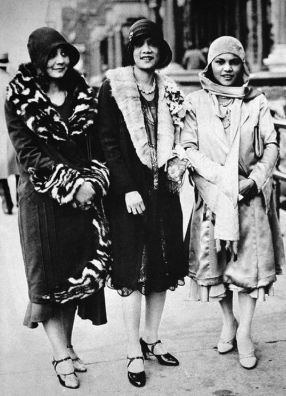
During the Harlem Renaissance we saw an explosion of music, literature, and nightlife that brought new energy to the country. The Great Migration brought many people north. By 1930, African Americans made up more than seventy percent of the population in Harlem alone. In this episode of the Harlem Renaissance, we’ll discover more people who had the courage to challenge how Black life would be remembered.
Bill Robinson, known to the world as “Bojangles,” born in May of 1878 pushed tap dancing from a street performance into refined art. At around age five a promoter discovered Robinson and hired him to be a pickaninny for his production. In white-produced shows, pickaninnies were black children who were placed on stage as props to sing, dance, or be the subject of jokes.
By age 19 Robinson left the Spanish-American War as a drummer to come to NYC and make a name for himself. His vision was to be the 1st black solo performer. In those days the Vaudeville circuit enforced a “two-color rule,” meaning Black performers were forbidden from performing solo and could only perform in pairs. Robinson rebelled in 1915, becoming the 1st Black solo headliner in a white vaudeville show.
Over the next few years, Bill became the highest-paid entertainer. After the stock market crash in 1929, Bill helped people generously and donated to charities. In 1933, Robinson was officially named the first honorary “Mayor of Harlem”, a celebrated title given to him by local political figures, celebrities, and the community.
Robinson seemed ageless with unlimited energy, even when his health was on the line, it caused the end of a 21-year marriage because he refused to stop dancing! One of his final acts was starring in the 1943 movie Stormy Weather. Bojangles would continue to perform for the next 10 years through his 70’s and until his death. His funeral was one of the largest in NYC history; over a million people mourned his death, with crowds gathered from Harlem to Brooklyn.
With his signature stair dances, Robinson elevated tap dance from floor footwork into architectural choreography. Robinson was revolutionary without giving speeches. Being a major influence on the artists who came after him. Jazz legend Louis Armstrong once wrote about seeing him, saying he was the sharpest black performer he’d ever seen & the greatest showman of the race.
Many of Harlem’s artists picked up a pen, a horn, shoes, or a paintbrush. Marcus Garvey picked up a microphone. Born in St. Ann’s Bay, Jamaica, Garvey was the son of a former slave who taught him to depend on no one. As a youth Garvey spent hours reading and always envisioned himself talking to large crowds. When Garvey read Booker T. Washington’s book “Up from Slavery”, he realized that blacks across the globe faced oppression. Garvey was determined to ensure the black race would not continue to be pushed around and he fought to unify across the world.
It was in Kingston, Jamaica, where the Universal Negro Improvement Association or (UNIA) was created. Their goal was racial pride and vocational training modeled on Booker T. Washington’s Tuskegee Institute. Garvey came to Harlem in 1916 not as an entertainer, but with a vision that Black people across the world should unite. The 1917 St.Louis Race Riot amplified Garvey’s ambition, but when Du Bois led a silent march down NYC’s 5th Ave. This wasn’t enough for Garvey because he felt some of the black leaders were too soft in their demand for change.
On the Corners of Harlem, Garvey preached about self-esteem, hope and a dream for black people to return back to Africa. He knew that the lack of organization is what led to much suffering in black communities. Anyone of African descent with 35 cents, a photograph, and a pledge to join Garvey in his fight could join the UNIA. Through the art of song they united & rallied through extravagant parades.
In 1918 Garvey published a newspaper called The Negro World. It was printed in English, Spanish, and French, serving as the voice of the UNIA and encouraged blacks to see themselves as part of a global community. The impact of the paper was so powerful that some governments attempted to ban it, in fear that its message would inspire resistance among African and Caribbean people living under European control.
Watching closely was a young official named J. Edgar Hoover. If this name sounds familiar, he attacked many influential Black leaders and organizations. From Du Bois, Paul Robeson, Martin Luther King Jr., Malcolm X, and the Black Panthers in the 1960s. He was so determined to get Garvey, he hired the first full-time black agent to infiltrate the UNIA.
Still, Garvey advanced and in 1919 created a shipping company called the “Black Star Line.” Its goal was to transport goods between Black communities worldwide, trips to Africa, and most importantly, demonstrate that Blacks could own a major international business. The Black Star Line was the first mass Black economic movement, with thousands of people of color investing not only for profit, but for racial progress. At its peak the UNIA employed over 1k people in Harlem.
By 1922 due to mismanagement and targeting by federal agents, the Black Star Line collapsed financially, while Garvey was arrested and convicted for mail fraud.
He served nearly two years in prison before President Calvin Coolidge ended his sentence, on the condition that Garvey be deported back to Jamaica. While in prison, Garvey wrote a poem called “Keep Cool”
Despite Garvey’s ambition and leadership, he had rivals in the black community. Du Bois called Garvey “the most dangerous enemy of the Negro race in America.” While Garvey saw Du Bois as a light-skinned elitist detached from working-class blacks. Nationalism vs. integration, despite their personal rivalry, their powerful strategies influenced Black activism.
Josephine Baker was a fearless lioness with a heart of gold. She was born in St. Louis, MO. Starting as a young teenager, she toured with vaudeville groups as a self-taught dancer. She would always create adventures by going out to find music and games to play. When she wasn’t in school she would be working, trading her childhood for survival.
When she began attending shows at the Booker T. Washington theater, she would perform outside of the theatre. One day she was noticed by the singer, Clara Smith who appreciated Baker’s street smarts and ambition, she asked her to join their show, and quickly stood out among the chorus girls with her boldness, personality and comedic presence. She was a rising star at the early age of 15. When she came of age and heard about a second touring opportunity of the musical “Shuffle Along” she did so without hesitation, leaving behind her husband. Her focus was on the future. When Baker came to Harlem, she joined the chorus of the show Plantation Days at the Lafayette Theatre, becoming one of the highest-paid chorus girls. But even with Harlem’s cultural explosion, opportunities for young Black female dancers were rough. In 1925, Baker left the United States for Paris, a move many artists made at that time to leave behind the racism in America.
Baker quickly rose to become one of the most famous entertainers in the world, recording over 150 songs, starring in 6 feature films, and performing in over 50 major cabaret productions. She gave approximately 5,000 live performances over a 50-year career! She even roamed the Paris streets with a pet cheetah named Chiquita!
Baker’s fame amplified her political activism. During World War II, she worked with the French Resistance, her missions involved covert espionage against Nazi occupation. She smuggled messages hidden in sheet music and used her celebrity to gather information. For her service, she was awarded the Croix de Guerre, the Cross of War and later the Legion of Honor by France, one of the country’s highest honors.
After the war, Baker turned her attention to civil rights. When she toured the U.S., she refused to perform for segregated audiences and spoke at the March on Washington in 1963. She was the only female speaker that day. After the grief and uncertainty of Dr. King’s death, Coretta Scott King asked Baker to consider taking over the leadership of the movement. Although Baker was honored, she refused, because she had adopted 12 children from around the world, whom she called her “Rainbow Tribe”. She felt her responsibility to them was too much to relocate to the US and accept such a demanding role. Josephine Baker was a global superstar and great humanitarian.
Zelda Wynn Valdes was a self-taught fashion designer and customer who changed the game! As a black woman, she pioneered in this field, fighting racial prejudice to create at all cost. Her innovative designs for the female body are still being used today!
As an entrepreneur, in 1948 she opened her boutique, Chez Zelda, on Broadway and West 158th Street. This landmark opening made her the first Black woman business owner with a storefront! Valdes possessed the ability to create clothes that fit the woman’s body best. She used exquisite textiles like silk, crepe, and satin, all to create curve-hugging evening gowns. She was the most sought-after designer for celebrities, blacks and whites, designing for Ella Fitzgerald and Josephine Baker among many others! She also created the iconic Playboy Bunny costume.
Beyond dressing celebs, Valdes fought systemic racism within her field. In 1949, she helped establish the New York chapter of the National Association of Fashion and Accessory Designers, whose goal was advancing Black professionals in the industry.
At the age of 65, she began the final chapter of her career as the head costumer for Arthur Mitchell’s Dance Theater of Harlem. It was there that she introduced a historic innovation, to dye the dancers’ tights and shoes to match their skin tones. Valdes pivoted from structural, corseted gowns to garments that could withstand intense physical movement, mastering the art of visual drama with high-performance.
Valdes continued designing for the Dance Theater of Harlem until her death in 2001 at the age of 96. Her legacy is a foundation for American fashion and Black creative expression.
Born in Great Barrington, Massachusetts, in 1868, W. E. B. Du Bois was truly a pioneer. As a student he idolized Fredrick Douglass, whom he praised as “the greatest of American Negro leaders”. Du Bois attended Fisk University, where he graduated with honors, and then became the first African American to earn a Ph.D. from Harvard University.
His dissertation “The Suppression of the African Slave-Trade to the United States of America,” brought facts and data, challenged all the lies about slavery, exposing the political and economic disadvantages that were enforced. He was the first to take a scientific approach to this matter. Racism dominated universities and life in general, but Du Bois used information as a weapon against ignorance. This dissertation became the first volume published in Harvard’s Historical Studies series.
After school Du Bois moved to Philadelphia to conduct a study of Philly’s Seventh Ward, one of the city’s largest Black communities. The result was The Philadelphia Negro, published in 1899 and regarded as the first modern sociological study in the United States. Du Bois walked the streets himself to see black life there 1st hand. Conducting over 5 thousand interviews with families, gathering employment records, data on housing, health, income, and even the neighborhood’s distance from schools. White Americans then believed that poverty and crime in Black communities were because of racial inferiority. Du Bois proved them wrong with facts. His work showed that the true causes of these problems were due to prejudice.
In 1899, Du Bois was living in Atlanta when tragedy struck. His first child Burghardt, got sick and was refused treatment by white doctors. He and his wife lost their child who died before reaching his second birthday. That same year, a Black man named Sam Hose was a victim of one of the most brutal lynchings of the era. The horror shocked Du Bois and he realized that statistics and research could not stop racial terror. Burghardt and Sam’s death transformed Du Bois’s struggle for civil rights from an intellectual one into something personal.
Through visual storytelling, Du Bois understood the power of images. For the 1900 World’s Fair he traveled to Paris with students and colleagues from Atlanta University to assemble “The Exhibit of American Negroes”. It featured photographs, charts, graphs, and maps, documenting the lives of African Americans a generation after the emancipation. Instead of images that reinforced racism, visitors saw Black men and women dressed with pride and confidence, children in schools, and black business owners.
The Souls of Black Folk, a groundbreaking work of American literature written in 1903. The book was a direct challenge to the philosophy of Booker T. Washington, who urged Blacks to focus on vocational training. Du Bois insisted that political rights, higher education, and full citizenship should take main priority.
Du Bois devoted an entire chapter in the book to spirituals. Entitled “Of Sorrow Songs” it explains how enslaved blacks used music to document history and express their hunger for freedom.
The great artist turned activist Paul Robeson was a titan of stage and screen. He looked to Du Bois as a mentor. After being blacklisted they began publishing their own newspaper in 1950 called Freedom. To directly reach the black community.
In 1905 Du Bois started the Niagara Movement, alongside activist William Monroe Trotter. Du Bois helped found the National Association for the Advancement of Colored People aka the NAACP. Its mission is dedicated to achieving political, educational, social, and economic equality. Though the only Black on staff at that time, in his position, Du Bois was the Director of Publicity and Research, and he proposed a national magazine as the organization’s voice. The publication was called The Crisis; its goal promoted civil rights and showcased Black art and literature. As editor of The Crisis, he helped launch and promote many of the voices of the Harlem Renaissance. His landmark essay, “Criteria of Negro Art,” argued that art should serve truth, beauty, and the struggle for justice. As an early advocate for women’s rights, he also consistently promoted the leadership and contributions of Black women.
Du Bois’ life was expansive; his influence went beyond civil rights activism. One of his theatrical productions, The Star of Ethiopia, was monumental and historical. It was created to educate blacks about their ancestry and enlighten white audiences about the humanity and achievements of Black people. He used theater to reclaim African history. It featured over 1,000 black performers! He also self-funded The Brownies’ Book, one of the first magazines for Black children. Du Bois remains one of the world’s most prominent advocates for World Peace, meeting with leading thinkers around the world.
By the final years of his life, Du Bois had become widely celebrated abroad and controversial at home. Arrested at the age of 83, Du Bois was framed in federal court as an agent of the Soviet Union. In 1952, the government revoked Du Bois’s passport to stop him from leaving the US. When his passport was returned, he accepted an invitation from Ghana’s first prime minister and president, Kwame Nkrumah. He was treated like royalty & dedicated himself to one final task. The creation of the Encyclopedia Africana. A project to tell African history from an African perspective. Du Bois spent his last years working to correct history distorted by prejudice. The American icon became a Ghanaian citizen and died there in 1963 at age 95 on the eve of the March on Washington.
And then there was Satchmo or Louis Armstrong, the musical genius from New Orleans who entered the Harlem Renaissance as an innovator who would influence music for generations to come. He was the first African American to host a national radio show, the first jazz musician to appear on the cover of Time magazine, and the first African American to receive featured billing in a major Hollywood movie. In fact, he made more than 12 Hollywood films and was the composer of over 50 songs!
Armstrong brought a fiery, innovative style to music. He extended the range of the trumpet. His tone, freedom, and solo improvisations pushed individual expression in jazz. Armstrong’s reputation rapidly grew as he also popularized scat singing.
Armstrong used to keep two rolls of cash in his pockets. One for himself and the other to give away. After performances, Armstrong always brought stacks of photos to give to his fans, who wanted to meet him. He once said, “The main thing is to live for that audience, ’cause what you’re there for is to please the people the best way you can. Those few moments belong to them. I’m not lookin to be on no high pedestal. They get their soul lifted because they got the same soul I have the minute I hit a note.”
Louis fought against prejudice and Jim Crow in his own way. His bright personality, big smiles, and laughter were thought of as “coonery” or “Uncle Tom” behavior. He was criticized because he wouldn’t participate in the protest marches for civil rights. Well aware that if he was on the front lines, his life was at risk, saying once, “They would even kill Jesus if he was black.” His logic was that if he got hit in the mouth, he wouldn’t be able to play the trumpet, and he considered that to be his weapon. Therefore, his contribution to the civil rights movement was through donations.
In the 1954 case of Brown vs. Board of Education, the Supreme Court unanimously ruled that separating children in public schools on the basis of race was unconstitutional. Three years later in 1957, the governor of Arkansas defied the Supreme Court and called in the National Guard with rifles to prevent black children from entering Little Rock Central High School. Armstrong became enraged when he watched on TV an angry white mob and footage of a white man spitting in the face of a young black girl. The violent incident was an embarrassment to the United States. As the Cold War was escalating, Armstrong had just been asked by the U.S. to embark on a goodwill tour of the Soviet Union.
Armstrong canceled the tour, and when a reporter asked for his reaction, he said: “The way they’re treating my people in the South, the government can go to hell. [It’s getting so bad], a colored man hasn’t got any country.” Armstrong called the governor a “no-good motherfucker”, and called President Eisenhower “two-faced”, saying that he had “no guts” for not standing up to the governor. No other jazz musician had the courage to speak out as strongly as Armstrong did.
The Harlem Renaissance was more than a cultural movement. It was a declaration that Black life, Black thought, and Black artistry were not African American history, but Human history. Through poetry, music, painting, sculpture, dance, fashion, literature, and activism, this generation pushed integrity and creative freedom in the face of oppression.
The great artists and thinkers it produced proved that art can be a force for resistance. As the Buddhist philosopher Daisaku Ikeda stated: “Art is a weapon for peace.” The Harlem Renaissance taught us that peace is not passive. And that a path forward can be created through expression, courage, collaboration, and the willingness to take responsibility for our land.